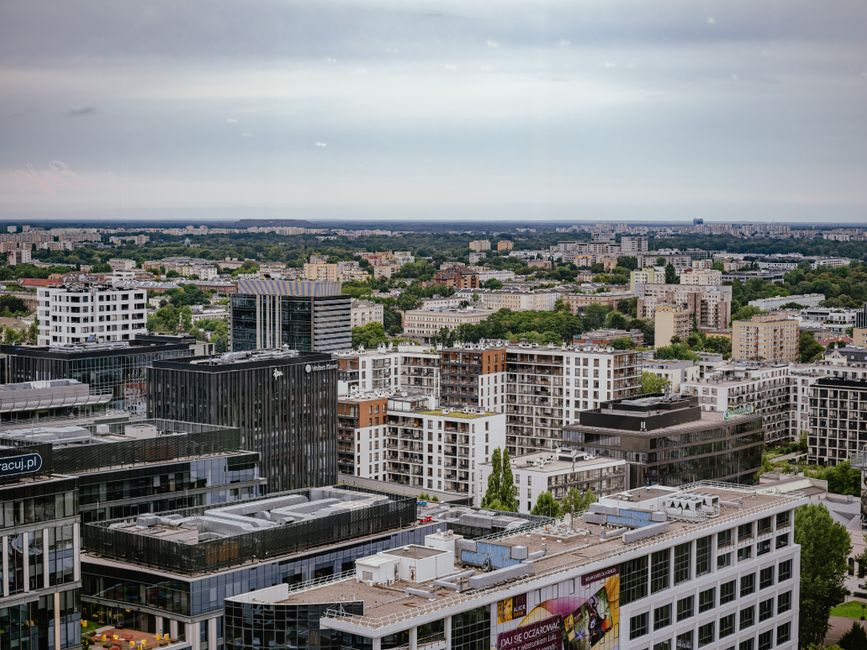
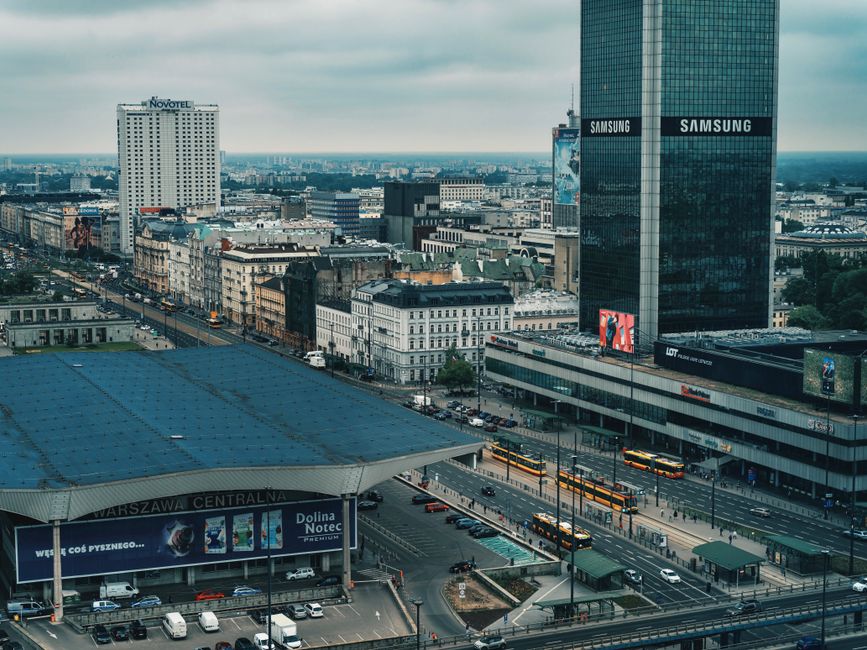
Warsaw's tech community has a deadline problem, in the best possible way. At least fourteen product roadmaps submitted to the Polish Agency for Enterprise Development (PARP) this spring target Q4 2026 or Q1 2027 launch windows, a concentration of planned releases that signals the city's startup ecosystem has moved well past post-pandemic recovery and into something that looks like a sprint.
The timing matters because the competitive pressure is real. Berlin's startup ecosystem attracted €3.2 billion in venture funding in 2025, and Tallinn continues to punch above its weight on per-capita terms. Warsaw, which recorded roughly €1.1 billion in disclosed tech investment last year according to Dealroom data, is not chasing those cities so much as trying to define its own category: a Central European hub where engineering depth, relatively lower burn rates and a large domestic market combine into something investors from London and Amsterdam are increasingly willing to back.
What's Actually Coming Down the Pipeline
The most closely watched project sits inside the Warsaw University of Technology campus on Plac Politechniki. A joint initiative between the university's Faculty of Electronics and a consortium that includes PKO Bank Polski and three unnamed institutional backers is expected to announce a quantum-classical hybrid computing pilot before the end of September. The project, referred to internally as QWarsaw, targets financial risk modelling as its first commercial use case. If the pilot clears regulatory review, a full lab buildout in the Mokotów district, likely near the existing cluster of tech offices along Domaniewska Street, is planned for mid-2027.
Meanwhile, the Praga Północ neighbourhood, which has been accumulating co-working spaces and early-stage studios since around 2022, is set to get a formal anchor. Reaktor Warsaw, a startup accelerator with Finnish roots, confirmed in June it will open a 2,400 square-metre permanent campus on Targowa Street by November 2026. The space will run three cohorts per year, each with twelve companies, and comes with a €50,000 equity-free grant per team sourced partly from EU Cohesion Funds under the Digital Poland programme.
Fintech remains the sector generating the most roadmap noise. Three Warsaw-based companies, Symmetrical.ai, Billon Group, and payments newcomer Karta Labs, have all indicated product expansions targeting the first half of 2027. Billon, whose document blockchain platform is already used by several Polish banks, plans to launch a cross-border payroll settlement product aimed at Ukrainian workers employed in Poland, a market that now involves an estimated 900,000 people according to the National Bank of Poland's 2025 labour flow report.
Infrastructure and the Gaps That Still Need Filling
Hardware is the acknowledged weak point. Warsaw has world-class software talent, the city's universities collectively graduate around 12,000 computer science and engineering students per year, but chip design and embedded systems work remains thin. The startup Teleport Photonics, operating out of a lab in the Ochota district, is one of the few local companies trying to change that. Its silicon photonics roadmap, oriented toward data centre interconnects, aims for a prototype tape-out by March 2027.
City government has skin in the game too. The Urząd Miasta Warszawy's Digital Transformation Office confirmed in late June it will expand the Warsaw Smart City platform by integrating real-time air quality and pedestrian flow data into a public API by the end of 2026. Developers will be able to query the system free of charge under a Creative Commons licence, a move designed to seed civic tech applications ahead of the city's 2028 European Capital of Innovation bid.
For founders and investors watching from outside, the practical near-term calendar looks like this: the Reaktor Warsaw campus opens in November, the QWarsaw quantum pilot result lands in September or October, and PARP's next startup funding tranche, worth a combined €80 million across two programmes, opens for applications on September 15. That window closes fast. Companies that aren't ready to file by October will wait until spring 2027, which means the next few months will determine who gets to build what Warsaw actually becomes.
This article was compiled by AI and screened before publishing. See our editorial standards.