Warsaw's parks registered more than 2.1 million visits in June 2026, according to city monitoring data from Zarząd Zieleni m.st. Warszawy, and a growing share of those visitors arrived on four legs. The city's dog-owning population, estimated at roughly 350,000 registered animals across the capital, has quietly become the engine driving a new kind of outdoor fitness culture: informal, sociable, and free.
The timing matters. Gym membership costs in Warsaw rose an average of 11 percent between January 2025 and June 2026, pushing a monthly pass at mid-range clubs like Zdrofit or Holmes Place toward the 150-180 złoty mark. Against that backdrop, the appeal of a no-fee workout anchored around a dog walk is not hard to understand. Fitness professionals and urban planners alike have started paying attention to what dog owners figured out on their own: the daily obligation of exercising a dog is, functionally, a structured movement programme.
The Spots Where It's Actually Happening
Pole Mokotowskie is the most visible example. Warsaw's largest park within the city limits, stretching across roughly 72 hectares in the Mokotów district, has developed a genuine before-work running scene centred on the dedicated dog-off-leash zone near the ul. Niepodległości entrance. By 7 a.m. on weekday mornings, the area functions less like a dog run and more like a loosely organised boot camp: owners do lunges and squats while their dogs sprint laps, or jog the perimeter path together in groups that have solidified over months into something resembling a running club, minus the registration form.
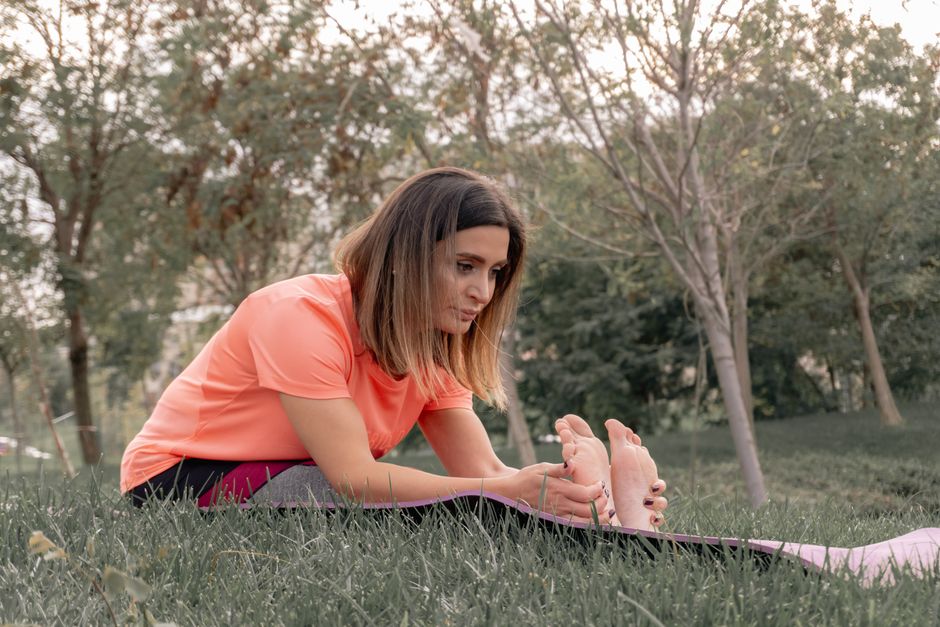
Further north, the Vistula boulevards between Most Świętokrzyski and Most Gdański have attracted a different crowd, younger, often using the riverside as a hybrid commute-and-workout route. The Bulwary Wiślane path is dog-friendly along its full length, and the combination of flat terrain, river views, and a scattering of outdoor calisthenics stations installed by the city in 2023 makes it a natural circuit-training venue. On weekend mornings, informal group yoga sessions near the Centrum Nauki Kopernik end of the boulevard regularly draw dog owners who tie leads to nearby benches and join in.
Królikarnia park in Mokotów and Ogród Saski in the city centre also see regular use, though the latter's central location and stricter leash rules make it better suited to brisk walks than anything more ambitious. For owners in Praga-Południe, Park Skaryszewski, with its 58 hectares of varied terrain around Jeziorko Kamionkowskie, offers hill intervals that are rare in this largely flat city.
Why Dogs Make Better Gym Partners Than You Think
The social dimension is not incidental. Research published in the International Journal of Environmental Research and Public Health in 2023 found that dog owners who exercised outdoors with their pets reported significantly higher rates of social interaction during physical activity than those who exercised alone, and were 34 percent more likely to maintain a consistent exercise routine across a 12-month period. The dog, in effect, functions as both an accountability mechanism and a conversation starter.
Warsaw's Towarzystwo Opieki nad Zwierzętami (TOZ), the animal welfare society with offices on ul. Nowy Świat, has been running a programme since March 2026 pairing shelter dogs with volunteer walkers on a structured weekend schedule through parks including Łazienki and Pole Mokotowskie. The scheme logs an average of 480 volunteer walking hours per month, useful data for anyone who wants the fitness and social benefits of dog ownership without full-time commitment.
For residents ready to make the most of these spaces before Warsaw's summer peaks in August, a few practical notes: the city's off-leash zones are mapped on the Zieleń Warszawy interactive portal at zielen.um.warszawa.pl, updated as of May 2026. Dogs must be vaccinated and registered under Warsaw's municipal bylaw. And if the Pole Mokotowskie morning crowd has taught regulars anything, it's that showing up at the same time three days a week, dog or no dog, is how the social part of the fitness equation actually starts to work.