Warsaw's Economy Hits a Rough Patch: Jobs, Property and Enterprise Face a Harder Second Half
Rising office vacancies, cooling foreign investment and a stubbornly tight labour market are testing Warsaw's reputation as Central Europe's most resilient business hub.
This article was generated by AI from the linked public sources. The Daily Warsaw is independently owned and covers Warsaw news free from advertiser or sponsor influence. Read our editorial standards →
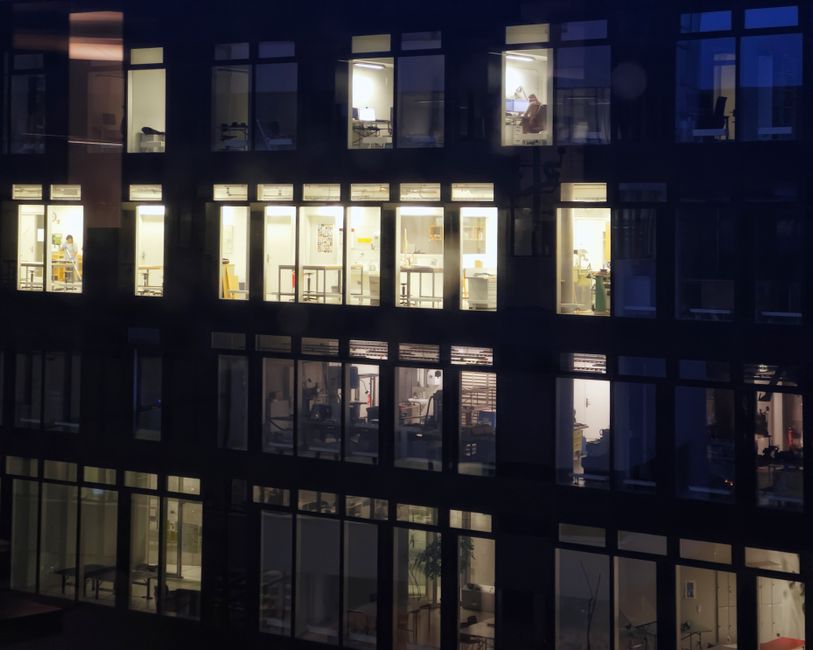
Warsaw's commercial property market recorded its highest office vacancy rate in six years during the second quarter of 2026, with roughly 13.4 percent of grade-A space across the city sitting empty — a figure that alarmed developers and prompted at least two major projects on Aleje Jerozolimskie to pause pre-leasing campaigns until autumn. The data, compiled by the Polish Council of Shopping Centres and corroborated by agency reports from Cushman & Wakefield's Warsaw office, underlines a broader cooling that is touching every corner of the capital's economy.
The timing matters. Poland's central bank, Narodowy Bank Polski, raised its benchmark rate to 6.25 percent in May after inflation re-accelerated to 5.8 percent year-on-year, squeezing both mortgage borrowers and the small-business lending market simultaneously. With the European Union's revised cohesion funding framework entering its 2026 disbursement cycle later than expected, the pipeline of infrastructure-linked contracts that typically props up Warsaw's construction and services sectors has narrowed sharply. Companies that spent the past two years hiring aggressively are now frozen — not cutting, but not growing either.
A Cooling Market From Mokotów to the Vistula Riverfront
The signs are visible at street level. The Mokotów Business Park cluster, long a benchmark for suburban office demand, has seen four tenants downsize since January. On the Vistula riverfront, the mixed-use Brewery Warsaw development on Grzybowska Street is marketing residences at between 18,000 and 24,000 zloty per square metre — prices that were achievable eighteen months ago but are now sitting on the market for an average of 94 days before contract, up from 47 days in the same period last year. Residential transactions in the Wola district, which absorbed enormous speculative investment between 2022 and 2024, fell 22 percent year-on-year in the first five months of 2026 according to data from the Warsaw Real Estate Association.
The enterprise picture is equally complicated. The Startup Hub Poland programme, which routes European Innovation Council co-financing to early-stage Polish companies, disbursed only 60 percent of its projected 2025 allocation before the new EU budget cycle created administrative delays. Several founders operating out of the WeWork space on Plac Europejski said the gap in bridge funding forced them to reduce headcount or defer product launches. Meanwhile, the Warsaw Employment Office reported in June that the number of registered jobseekers in the capital climbed to 38,400 — still low by historical standards but the highest reading since mid-2021, and a 17-percent increase over December 2025.
Foreign Capital Gets Cautious
International investors are recalibrating. German and French capital — traditionally the two largest foreign sources for Warsaw commercial deals — accounted for just 31 percent of disclosed commercial transactions in the first half of 2026, down from 44 percent for the same period in 2024. Some of that retreat reflects global risk-off sentiment sharpened by political turbulence across the Middle East, including the uncertainty following the death of Iran's Supreme Leader, which sent energy prices briefly spiking in late June. Warsaw, unlike many Western European capitals, imports a smaller share of its energy from volatile corridors, but the knock-on effect on German industrial output directly impacts Polish export-linked services firms clustered around the Służewiec technology corridor.
What should Warsaw businesses actually do with this information? Commercial tenants whose leases expire before December 2026 are in a genuine negotiating position — landlords along Twarda Street and in the Centrum district are offering rent-free periods of three to five months on three-year deals, something unthinkable in 2023. For residential buyers, analysts at mBank's Warsaw economics desk recommend waiting until the NBP signals a rate-cutting cycle, which most internal forecasts place no earlier than the first quarter of 2027. For founders and SME owners, the priority is shoring up zloty-denominated credit lines before any further rate adjustments: the window on relatively accessible revolving credit at current spreads may close before year-end. The headwinds are real, but Warsaw's fundamentals — a 2.8 percent unemployment rate, a young professional population and its status as NATO's eastern economic anchor — mean this is a stress test, not a structural break.
Covering business in Warsaw. This article was generated by AI from the linked sources and was not reviewed by a human editor before publishing. See our editorial standards.